UX DESIGN : RESEARCH : AI SCIENCEUX DESIGN : RESEARCH : AI SCIENCEUX DESIGN : RESEARCH : AI SCIENCE
I led design and research for Amazon Healthcare AI experiences focused on one outcome: reducing operational friction without losing clinical trust. My team designed for call center teams, schedulers, and providers who often spend most of their day stitching information across fragmented systems instead of caring for patients. The UX strategy centered on evidence-linked outputs, transparent handoffs, and role-specific workflows that keep humans in control while AI agents handle repetitive administrative work. My role was to ensure the design team was properly empowered, push through technical constraints, and make disciplined resource tradeoffs while we prototyped and validated interaction patterns.
At the patient access layer, we shaped experiences for verification, appointment scheduling, and documentation preparation in a way that feels fast but accountable. In production contexts aligned with Amazon Connect Health patterns, we applied conversational UX and EHR-connected workflow design to reduce manual burden and abandonment risk. Early operational outcomes supported this direction: health systems reported measurable time savings per call, hundreds of staff hours redirected to direct patient support each week, and meaningful reductions in abandoned interactions.
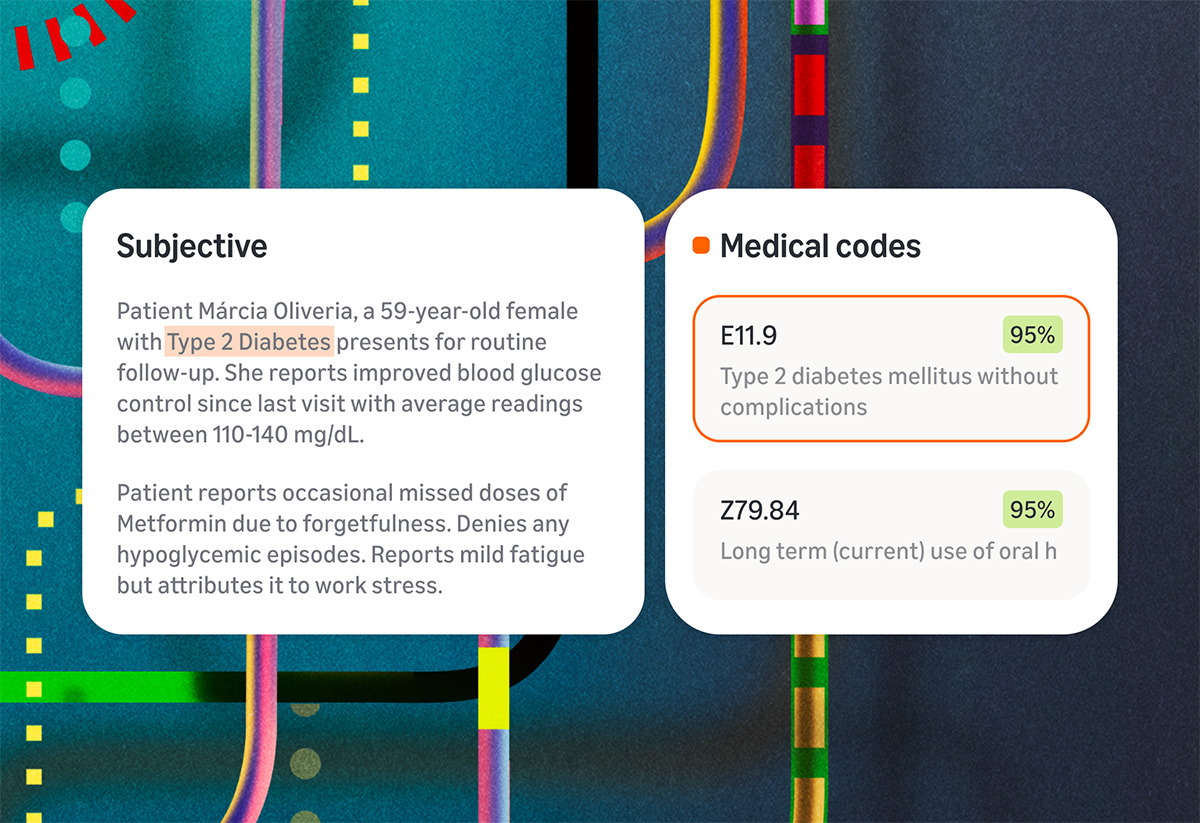
For clinicians, Ambient Listening and downstream coding and summary workflows were designed to be auditable, not opaque. Every generated note or coding suggestion was paired with source-linked context so teams could review, edit, and finalize with confidence. Framing AI as a collaborative assistant, rather than a black box, improved adoption and helped establish a scalable design foundation for Amazon Healthcare AI across care navigation, pre-visit preparation, and post-visit documentation workflows.
💬 Want to know more about this project? Click to ask me questions about Amazon Healthcare AI